

 9019956724
 Anaesthesiology
 Dialysis
 ENT
ENT General Medicine
 General Surgery
 ICU and Emergency
 Medical Oncology
 Nephrology
 Neurosurgery
 Obstetrics and Gynecology
 Orthopaedics
 Pathology
 Pediatrics
 Physiotherapy
 Plastic Surgery
 Pulmonology
 Radiology
 Surgical Oncology
 Urology




Understanding Knee Pain While Climbing Stairs
Knee pain might make everyday activities like climbing stairs uncomfortable. If it is an occasional discomfort, it may be just muscle stress; however, if the pain seems continuous, it should not be overlooked. The pain may be caused by muscle-related issues or conditions affecting the knee joint and surrounding tissues.
This article discusses the common causes of knee pain while climbing stairs, the symptoms that may accompany it, how the condition is diagnosed and treated, and when consulting an orthopaedic doctor may be necessary.
Table Of Contents
- Understanding Knee Pain While Climbing Stairs
- Common Causes of Knee Pain While Climbing Stairs
- What Symptoms Can Occur Along With Knee Pain?
- Why Does the Knee Hurt on Stairs but Not While Walking?
- How Is Knee Pain Diagnosed?
- How Is Knee Pain Treated?
- When Should You See an Orthopaedic Doctor?
- Can Knee Pain While Climbing Stairs Be Prevented?
- Conclusion
- Frequently Asked Questions
Common Causes of Knee Pain While Climbing Stairs
Several conditions can contribute to knee pain during stair climbing. Some are related to overuse or muscle weakness, while others may involve cartilage, tendons, or the joint.
Patellofemoral Pain Syndrome
Patellofemoral pain syndrome is considered a common cause of pain around the front of the knee. It involves the area where the kneecap joins with the thigh bone. The pain often worsens during activities such as climbing stairs, squatting, running, or jumping. This is because these activities require repeated bending of the knee.
A person may also notice popping or crackling around the kneecap. Sitting for unusually extended periods with the knee bent can sometimes worsen pain or discomfort. Sometimes, muscle weakness or changes in kneecap movement can contribute to this condition.
Knee Osteoarthritis
Osteoarthritis develops when the protective cartilage within a joint gradually breaks down. It can often lead to pain, stiffness, swelling, and reduced movement. Stair climbing can make osteoarthritis symptoms more noticeable because the knee has to handle increased load while bending.
People with knee osteoarthritis may also experience stiffness after rest. Pain can become more noticeable after physical activity. The risk of the condition generally increases with age. Previous knee injuries, excess body weight, and certain other factors can also increase the likelihood of osteoarthritis.
Chondromalacia Patella
Chondromalacia involves softening or damage of the cartilage underneath the kneecap. It can cause a dull ache around or behind the kneecap. Climbing stairs, squatting, kneeling, and sitting with the knees bent for extended periods can trigger symptoms. Some people also notice grinding or cracking sensations.
Weak Thigh & Hip Muscles
The muscles around the hips and thighs help control knee movement. Weakness in these muscles can affect how the knee handles load during stair climbing. The quadriceps are particularly important for controlling the knee. Weak hip muscles can also affect lower-limb alignment.
Patellar Tendinitis
The patellar tendon connects the kneecap to the shinbone. It helps the knee straighten and plays an important role when climbing stairs. Repeated jumping, running, or sudden increases in physical activity can irritate this tendon. This might aggravate the pain because the tendon has to work against body weight.
Meniscus Injury
The menisci are pieces of cartilage that help absorb shock inside the knee. A meniscus can become damaged after a twisting injury or through gradual age-related changes. A meniscus problem may cause pain on the inner or outer side of the knee. Some people also experience catching, clicking, swelling, or locking. Pain during climbing stairs can be particularly noticeable when the knee is repeatedly bent under load.
Bursitis
Bursae are small fluid-filled sacs that reduce friction between tissues around the knee. When a bursa becomes inflamed, it can cause pain and swelling. The condition is usually caused by repeated kneeling, pressure, or overuse of the knee. The affected area may feel tender or swollen. Stair climbing can worsen symptoms, as it requires repeatedly moving inflamed joints.
Previous Knee Injury
Previous ligament injuries, fractures, cartilage damage, or surgery may alter knee mechanics. This can make activities such as stair climbing uncomfortable.
What Symptoms Can Occur Along With Knee Pain?
The type of symptoms can provide important information about the underlying problem. Some of the symptoms include:
- Pain around or behind the kneecap
- Knee stiffness
- Swelling
- Clicking or cracking
- Reduced range of motion
- Weakness
- Tenderness around the joint
- Difficulty bending or straightening the knee
- Knee instability
- Locking or catching
Note: These symptoms can occur with injuries or other knee conditions that may require medical assessment.
Why Does the Knee Hurt on Stairs but Not While Walking?
The knee hurts while ascending or descending the stairs because this puts three to seven times more pressure on the kneecap joint than walking on the flat ground. Stair climbing requires the knee to bend past 90 degrees and also requires greater muscle activity. Hence, a person with an early or mild knee problem may tolerate normal walking but develop pain during stairs.
How Is Knee Pain Diagnosed?
Diagnosing knee pain starts with understanding where the pain occurs, when it appears, how frequently it occurs, and what makes it worse. Here are some diagnoses that an orthopaedic might suggest.
Medical History and Symptoms
First, the doctor may ask about:
- When did the knee pain start?
- Whether the pain began suddenly or gradually?
- What is the exact location of the pain?
- Does the pain occur only while climbing stairs or during other activities?
- Any previous knee injury or surgery?
- Does the person experience swelling, stiffness, clicking, locking, or instability?
- Does the pain worsen or improve with any particular activities?
This information helps narrow down the possible cause before further examination.
Physical Examination
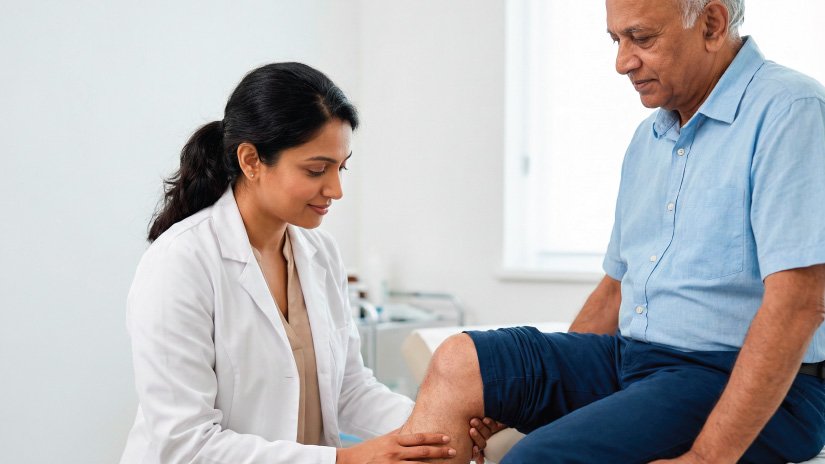
The doctor will examine the knee for tenderness, swelling, range of motion, strength, and stability. They may gently move the knee and test to identify painful movements or restricted motion. The doctor may also assess the alignment of the knee and how the kneecap moves. The flexibility & strength of the surrounding muscles may also be checked.
Imaging Tests
Imaging is not required in every case. It may be recommended when symptoms persist, follow an injury, or suggest an underlying structural problem.
- X-ray: An X-ray can show bone-related changes. It may help identify osteoarthritis, joint space changes, fractures, or other abnormalities.
- MRI: The MRI scan provides a more detailed view of soft tissues. It can help detect problems involving the meniscus, ligaments, cartilage, tendons, and other structures that may not be visible on an X-ray.
The type of imaging recommended depends on the symptoms and findings from the physical examination. This approach helps the orthopaedic doctor identify the likely cause and choose an appropriate treatment plan.
How Is Knee Pain Treated?
Treatment depends on the underlying cause. There is no single treatment that works for every type of knee pain.
Activity Modification
Reducing activities that repeatedly aggravate the knee can help during a painful flare-up. This does not always mean complete rest. Gentle movement is often useful when it can be performed comfortably. Doctors may recommend temporarily reducing repeated stair climbing, jumping, or high-impact exercise.
Ice and Other Home Measures
An ice pack wrapped in a cloth may help with pain and swelling after activity. Avoid placing ice directly on the affected area. Other measures may include elevation and temporary changes to activities that increase discomfort.
Physiotherapy and Exercise
Physiotherapy can help address weakness, flexibility problems, movement patterns, and joint function. Exercises may focus on the quadriceps, hamstrings, glutes, and other muscles around the hip and knee. The exercises recommended depend on the underlying condition.
Note: Exercises for knee pain should only be performed under the supervision of a professional therapist or trainer.
Weight Management
Excess body weight might increase the mechanical load placed on the knees. For people who are overweight, gradual weight management may reduce stress on the knee and support overall joint health. It can be particularly useful when knee pain is associated with osteoarthritis.
Medicines
Doctors may recommend pain-relieving or anti-inflammatory medicines if required. The choice depends on the person’s health, other medicines, and the cause of the pain. Medication should not be used regularly without proper medical advice, especially when the pain is continuous.
When Should You See an Orthopaedic Doctor?
Not every episode of knee pain requires immediate medical attention. Mild pain after unusual activity may improve with reduced strain and appropriate self-care. However, persistent symptoms should not be ignored.
An orthopaedic consultation is advisable when:
- Pain continues for several weeks
- The pain is getting worse
- Stairs are becoming increasingly difficult
- The knee repeatedly swells
- The knee locks or catches
- The knee gives way or feels unstable
- There is significant stiffness
- Pain interferes with normal activities
- Pain develops after a fall or twisting injury
- The knee cannot be fully bent or straightened
Sudden, severe pain, significant swelling, inability to bear weight, or significant instability after an injury should be assessed promptly.
Can Knee Pain While Climbing Stairs Be Prevented?
Some causes cannot be completely prevented. However, several habits can help reduce unnecessary stress on the knees. Regular strength training can improve the muscles that support the knee. Start slow and then gradually increase the training frequency, as suggested by the doctors.
Patients may also need to wear supportive footwear to improve comfort during daily activities. Plus, it is important to maintain a healthy body weight to help reduce mechanical stress on the joints. It is also best to avoid sudden increases in running, jumping, or stair-based exercise.
Conclusion
Knee pain while climbing stairs can be concerning, but it does not always mean that long-term joint problems are inevitable. With the right diagnosis and timely care, many causes can be managed effectively.
Though mild pain can be managed at home, see a doctor for persistent pain. Professional guidance can also make treatment more focused and effective. With appropriate exercises, lifestyle adjustments, and medical care when needed, many people can work towards stronger knees and more confident movement.
Frequently Asked Questions (FAQs)
- How do I stop knee pain when climbing stairs?
Reduce activities that worsen the pain, use ice for swelling, and follow appropriate strengthening exercises. See an orthopaedic doctor if pain persists. - What is the figure 4 test for knee pain?
It is a movement test in which one ankle is placed over the opposite knee to assess pain or stiffness in the hip and knee. - What is a simple and effective home remedy for knee pain?
Applying an ice pack wrapped in a cloth for 15–20 minutes may help reduce pain and swelling. - Which food is not good for knee pain?
Excessive processed foods, sugary foods, and foods high in unhealthy fats may promote inflammation and weight gain. - What sleeping position is best for knee pain?
Sleeping on your back with a pillow under your knees can help keep your joints supported and comfortable.
 WhatsApp Us